
How Physiotherapy Helps After a Stroke
A stroke can change a person’s life in an instant. When the blood supply to part of the brain is disrupted, the affected cells begin to die, resulting in damage that can alter movement, speech, thinking and emotion. For stroke survivors and their families, recovery is often a long and uncertain road.
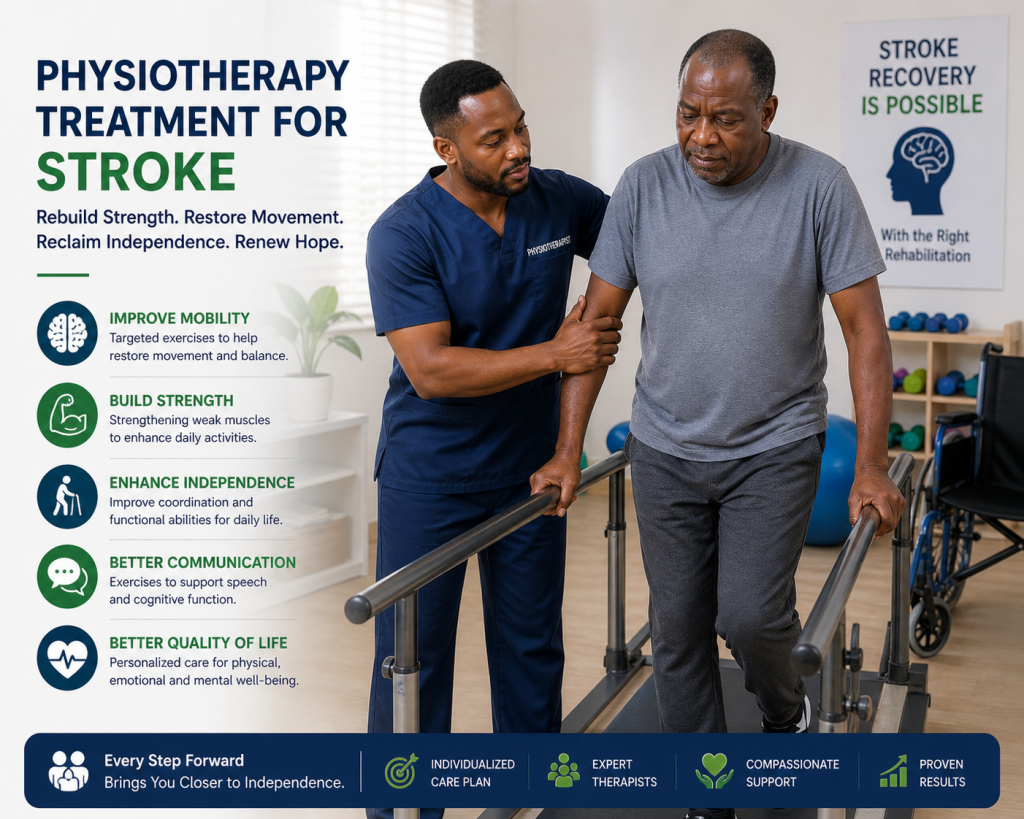
At Mobility Physiotherapy Clinic we support stroke patients throughout Lagos, delivering expert rehabilitation and physiotherapy from our specialist clinics in Lekki, Ikeja and comfort of patient’s home – helping them regain independence, confidence and strength.
Rebuilding Life After a Stroke
Physiotherapy plays a central role in this process. With tailored, evidence-based rehabilitation services, and a skilled multidisciplinary team, post-stroke rehabilitation can dramatically improve outcomes and quality of life.
In this article, we’ll explore how physiotherapy helps after a stroke, drawing on the latest research and our own clinical practice and expertise to explain what works, why it matters, and how recovery unfolds.
1. Understanding Stroke and Its Impact on the Body
A stroke occurs when the brain’s blood flow is interrupted – either by a blockage (ischaemic stroke) or a bleed (haemorrhagic stroke). In the Nigeria, around 100,000 people experience a stroke each year, and it remains one of the leading causes of adult disability.
Because different parts of the brain control different functions, no two strokes are the same. The area of the brain affected determines which body systems are impacted.
Common challenges include:
- Muscle weakness or paralysis on one side of the body
- Difficulty walking and maintaining balance
- Loss of coordination and fine motor skills
- Speech and language difficulties
- Changes in vision, sensation, or cognition
- Emotional and psychological effects, such as anxiety or low mood
Physiotherapy is a key part of stroke management, focusing on restoring motor function, muscle control, and overall mobility – while supporting the patient’s mental well-being throughout the recovery process.
2. The Role of Physiotherapy in Stroke Rehabilitation
Stroke rehabilitation should begin as soon as possible after stroke onset – often within the first few days in hospital. Early mobilisation helps prevent muscle atrophy, joint stiffness, and complications such as blood clots or pneumonia.
Physiotherapists are essential members of the healthcare team, working alongside occupational therapists, speech therapists, and doctors to deliver a structured and multidisciplinary recovery plan.
Key Goals of Stroke Physiotherapy
The main goals of stroke physiotherapy are:
- Regaining movement and muscle strength
- Restoring balance and walking ability
- Reducing muscle spasms and stiffness
- Improving coordination and upper limb function
- Promoting independence in daily living
- Preventing complications such as falls or contractures
At Mobility Physiotherapy Clinic, each stroke rehabilitation plan is bespoke – informed by clinical assessment, functional goals, and a research-based, expert-led approach to neurological rehabilitation.
3. How Physiotherapy Supports the Recovery Process
Physiotherapy after a stroke focuses on retraining the brain and body to work together again. This is possible because of neuroplasticity – the brain’s remarkable ability to reorganise and form new neural connections.
Harnessing Neuroplasticity for Stroke Recovery
Through repetitive practice, task-specific training, and functional exercises, stroke survivors can gradually regain skills that were lost or impaired. The physiotherapist’s role is to guide safe, consistent, and meaningful movement practice that strengthens the affected limb and encourages the brain to re-learn movement patterns.
Typical physiotherapy sessions may include:
- Stretching exercises to maintain joint flexibility
- Strength training to rebuild weakened muscles
- Balance and gait training to improve walking speed and confidence
- Constraint Induced Movement Therapy (CIMT), involves gently restricting movement in the unaffected limb to encourage greater use and strength in the weaker side
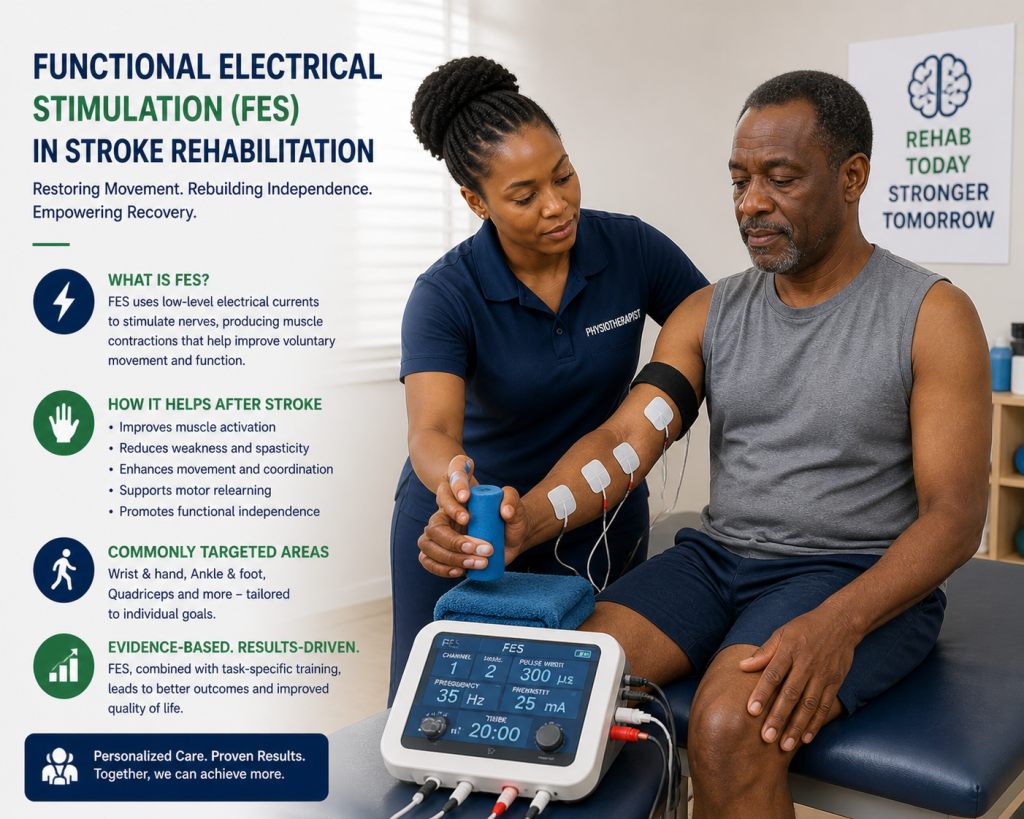
- Functional electrical stimulation (FES) to activate muscles that are difficult to control voluntarily
- Treadmill training and gait speed exercises to enhance endurance and coordination
- Mirror therapy and mental practice to stimulate neural pathways for movement
These techniques are combined and adapted depending on the stage of recovery, and on the patient’s personal goals.
4.The Importance of Starting Physiotherapy Early
Extensive research and major clinical guidelines support the view that stroke rehabilitation should begin as soon as the patient is medically stable – typically within the first few days after stroke onset. Early intervention is important for promoting recovery, restoring movement and reducing secondary complications.
How Soon After a Stroke Can You Start Rehabilitation?
The optimal timing remains under investigation: for example, the AVERT Trial found that very early mobilisation (within 24 hours) did not necessarily lead to better outcomes and may even be associated with increased dependency. Similarly, the NICE guidelines advise caution during this early window, noting that if people need help to sit out of bed, stand, or walk, high-intensity mobilisation should not be offered within the first 24 hours after symptom onset.
Why Every Day Matters After a Stroke
Mobility Physiotherapy Clinic clinicians use evidence-based protocols to start post-stroke rehabilitation as soon as it’s safe to do so. Even gentle stretching exercises and passive movements in the first few days can maintain circulation, prevent muscle atrophy, and reduce the risk of muscle spasms.
As the patient stabilises, functional training, such as sitting, standing, or supported walking , helps rebuild confidence and lay the groundwork for more complex motor recovery.
The Importance of Intensive Therapy
Current NICE guidelines emphasise the importance of intensive, needs-based rehabilitation for stroke survivors. They recommend offering at least three hours of multidisciplinary therapy per day, five days per week, covering physiotherapy, occupational therapy, and speech and language therapy.
Where this level of intensity isn’t possible, therapy should still be provided for a minimum of five days per week, ensuring consistent progress. This structured, frequent approach aligns closely with our own rehabilitation philosophy – focusing on active, sustained recovery that achieves results. How Physiotherapy Helps After a Stroke
5. Advanced Techniques in Stroke Physiotherapy
Over the past two decades, major advances in neurological recovery have transformed how physiotherapists help stroke survivors regain independence.
At Mobility Physiotherapy Clinic, we incorporate several modern, research-supported methods into our practice.
Constraint Induced Movement Therapy (CIMT)
CIMT involves restricting movement in the unaffected arm to encourage use of the affected limb. Multiple controlled trials have shown CIMT improves upper extremity function and daily use of the weaker side.
How Physiotherapy Helps After a Stroke with Electrical Stimulation
Through electrical stimulation, small currents are delivered to weak muscles, causing them to contract. This supports muscle strength, walking speed, and upper limb function, particularly when combined with task-specific training.
Mirror Therapy
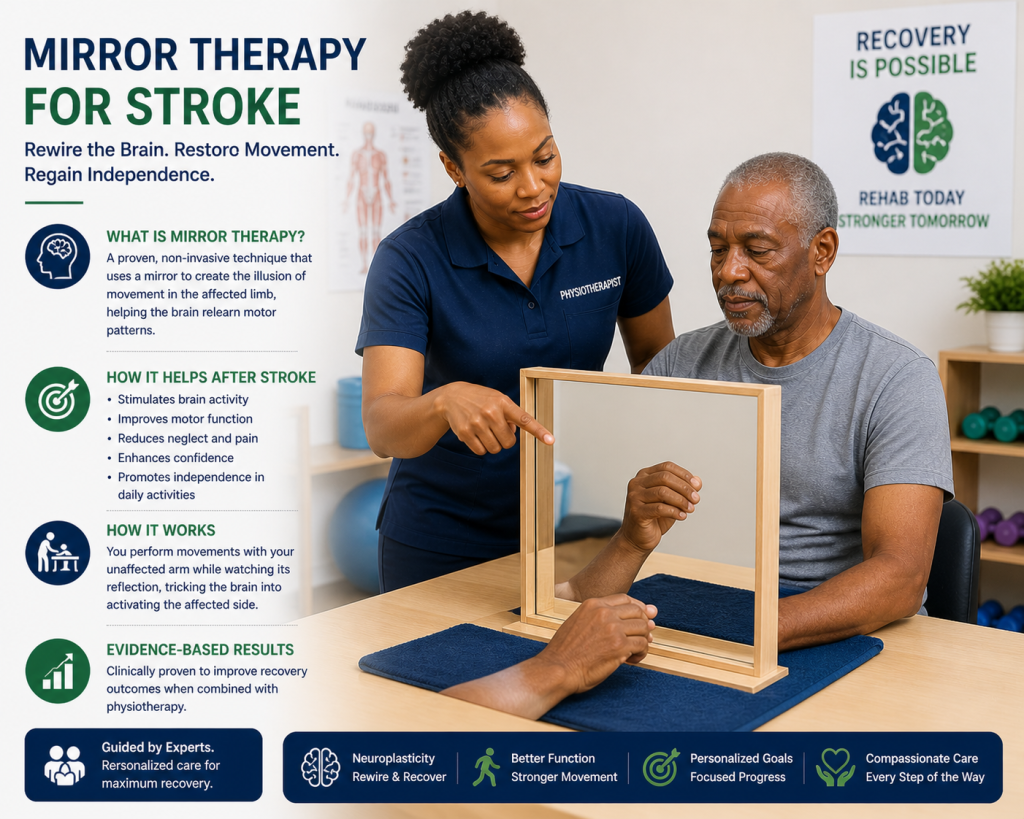
By moving the unaffected limb while watching its reflection, the brain perceives the affected limb as moving. This visual feedback can improve motor function and reduce pain. How Physiotherapy Helps After a Stroke
Treadmill and Gait Training
Supported treadmill walking helps improve gait speed, standing balance, and walking ability, especially when paired with bilateral training and repetitive practice.
How Physiotherapy Helps After a Stroke Mental Practice
Research shows that guided visualisation – imagining movements before performing them – enhances neurological recovery by activating motor areas of the brain.
Speech and Language Therapy
Communication challenges, such as aphasia, are common after a stroke, particularly when the brain areas responsible for speech and language have been affected. Working closely with speech therapists, patients can relearn how to express themselves, understand language, and strengthen the muscles involved in speech and swallowing.
Research reviewed by the National Institute for Health and Care Research (NIHR) shows that therapy is most effective when started within 28 days of stroke, delivered frequently and in high doses, and supported by regular practice at home. How Physiotherapy Helps After a Stroke
A Coordinated Pathway to Recovery
Consistent, early intervention leads to the best improvements in language skills, cognitive engagement, and overall quality of life for stroke survivors.
At Mobility Physiotherapy Clinic, each technique is selected based on individual needs, and integrated into a structured rehabilitation plan overseen by our experienced physiotherapists and occupational therapists.
8 Why Choose Mobility Physiotherapy Clinic for Stroke Rehabilitation
At Mobility Physiotherapy Clinic, our difference lies in the combination of clinical expertise, state-of-the-art facilities, and genuine dedication to every patient.
Our clinical team brings together over 7 years of combined experience treating stroke survivors across all stages of recovery.
Proven Expertise and Real Results
One of our most inspiring success stories involves a client who began their rehabilitation journey wheelchair-bound and, through our intensive programme – attending six hours per week – he regained the strength and confidence to lead our stroke classes and even play walking football. This transformation demonstrates what is possible through dedication and structured support.
We provide:
- Specialist neurological rehabilitation from experienced physiotherapists
- Collaborative care with occupational therapists and speech therapists
- Access to advanced technologies, including electrical stimulation and gait analysis
- Tailored rehabilitation plans built around personal goals
- Ongoing support for both physical and emotional recovery
Supporting Recovery in Our Clinics and Your Home
Our clinics in lekki, and Ikeja, are equipped to provide the highest standards of care – whether patients are in the early recovery stage or navigating the chronic phase of their journey.
We also offer home physiotherapy services providing expert treatment in the comfort of your own home. Whether you need support with mobility, injury recovery, or managing a long-term condition, our home visit physiotherapists deliver personalised care to help you regain strength, movement, and independence.
Rebuilding Hope and Independence
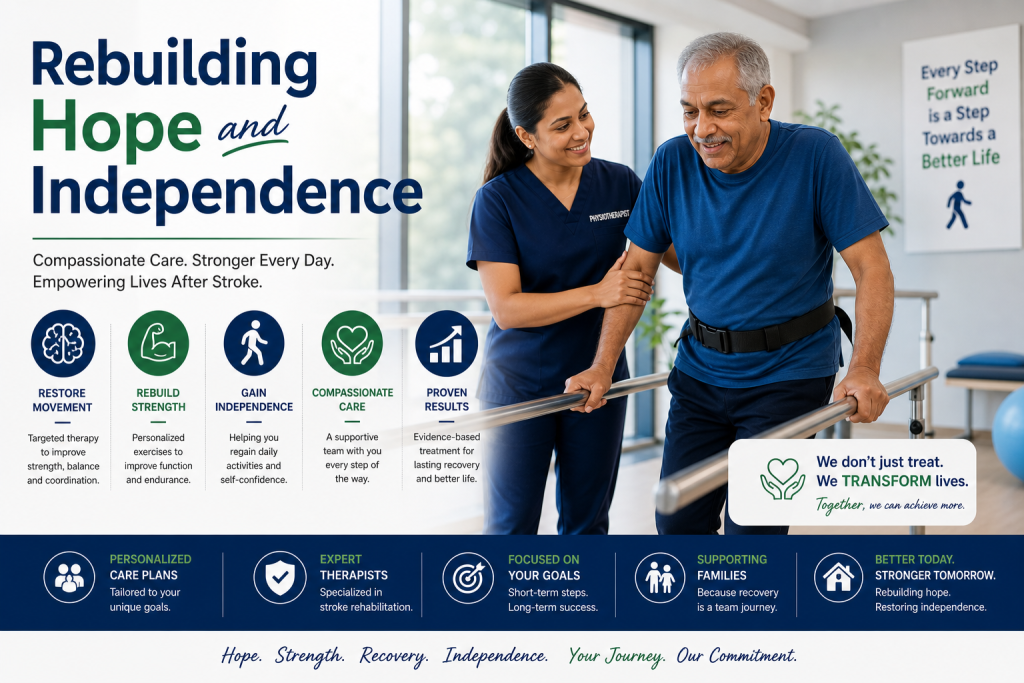
Recovery after a stroke is a journey – and no two journeys are ever the same. However, with the right support, knowledge, and persistence, meaningful progress is always possible.
Physiotherapy offers far more than physical recovery. It helps rebuild confidence, restore independence, and reclaim a sense of control over daily life.
At Mobility Physiotherapy Clinic, we’re proud to be part of that journey – helping stroke survivors across Lagos, and beyond rediscover movement, independence and hope.
Get in Touch Today
Contact us today to discuss how a personalised stroke rehabilitation programme can support your recovery, and empower you to move forward with confidence.