
How to Stay Active and Mobile After 50
How to Stay Active and Mobile After 50
Getting older doesn’t mean you have to stop doing the things you enjoy.
Walking, exercising, travelling, spending time with family, playing sport and staying independent can all remain important parts of life.
But aches, stiffness, injuries or persistent pain can gradually make you less active.
You might start walking less.
You might stop doing certain exercises.
You might think twice before travelling.
Or you might find yourself wondering whether becoming less mobile is simply part of getting older.
It doesn’t have to be.

Why does mobility matter as you get older?
Mobility is about more than how easily you can move a particular joint.
It can affect your ability to manage everyday life and continue doing the activities that matter to you.
Good mobility can help you remain involved in:
- Walking
- Exercise
- Travel
- Sport
- Hobbies
- Family activities
- Everyday independence
The aim isn’t to chase a perfect body or eliminate every ache.
It’s to maintain your ability and confidence to participate in the life you want.
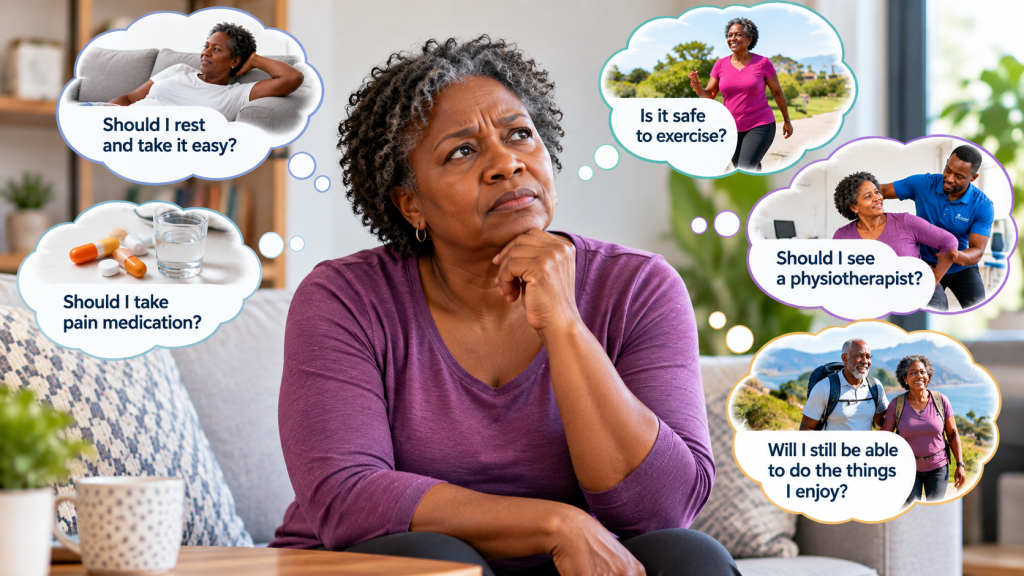
What can cause you to become less active?
There can be many reasons.
You may have developed persistent knee, hip, shoulder or back pain.
You may have had an injury.
You may have become worried that exercise will make your symptoms worse.
Or you may simply have noticed that activities that once felt easy now require more effort.
The important thing is to recognise when a physical problem is beginning to change your behaviour.
For example:
Are you walking less because of pain?
Have you stopped exercising because you’re worried about making things worse?
Are you avoiding activities you used to enjoy?
These changes can be useful signals that it may be time to understand what is happening.
DOES THIS SOUND FAMILIAR?
✓ You’ve tried resting but the pain keeps coming back.
✓ You’ve been taking painkillers when things get uncomfortable.
✓ You’ve tried exercises from YouTube, but you’re not sure they’re right for you.
✓ You’ve gradually started doing less because certain movements hurt.
✓ You may have even been told, “It’s probably just your age.”
Persistent pain, stiffness or reduced movement shouldn’t simply be something you have to put up with.
How can you improve your mobility after 50?
There isn’t one exercise programme that is right for everyone.
A useful starting point is to understand your current abilities, your limitations and what you want to achieve.
Your plan might involve areas such as:
Strength
Building or maintaining strength can support your ability to perform everyday activities and exercise.
Mobility
Working on movement can help you move more confidently and comfortably.
Exercise
The appropriate type and level of exercise depends on your individual circumstances.
Rehabilitation
If pain or injury has caused you to reduce your activity, rehabilitation can help you progressively work towards your goals.
Confidence
Understanding what’s happening and knowing what you can do can help you feel more confident about moving again.
What should I do if pain is stopping me from being active?
Don’t assume that reduced activity is simply something you have to accept.
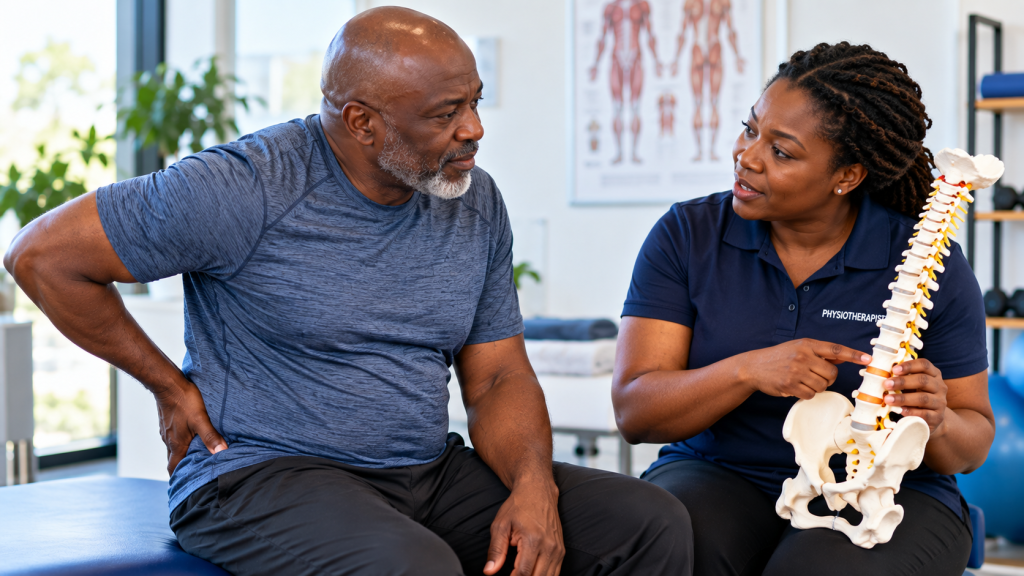
If pain is affecting your walking, exercise, travel, family life or independence, consider getting it assessed.
A physiotherapist can help you understand what may be contributing to your problem and develop a plan around your goals, lifestyle and circumstances.
Frequently asked questions
Is it too late to improve my mobility after 50?
No particular age automatically means you have to stop working on your mobility or physical activity. Your starting point and goals are individual.
How often should I exercise after 50?
The appropriate amount of exercise depends on your health, fitness, symptoms and goals. A personalised approach may be useful if pain or injury is affecting your activity.
What exercises are best for staying mobile?
There isn't one exercise that is best for everyone. A suitable programme should take into account your current ability, goals and any problems affecting your movement.
When should I see a physiotherapist?
Consider professional assessment if pain, stiffness or injury is affecting your everyday activities, exercise, walking or independence, particularly if the problem is persistent or keeps returning.
Your goal isn't simply to feel younger
It’s to keep doing the things that matter to you.
Whether that’s walking further, returning to exercise, travelling confidently, spending time with your grandchildren or maintaining your independence, your treatment should be connected to those goals.
Move better. Stay independent. Live the life you want.
If pain or reduced mobility is getting in the way, book a Mobility Physiotherapy assessment and start working towards getting back to what matters to you.


Book Appointment
Book your appointment online at a time that suits you. Prefer to speak to us? Call us on Phone: 09053369864, Whatsapp: 08058404754.

Have A Question Before You Book?
If you’re not ready to book an appointment yet, you can request a call from one of our team members. We’ll help you understand your next step.

Request a FREE Discovery Session
Not sure if physiotherapy is right for you? Have a chat with our team and ask any questions you may have.
How to Stay Active and Mobile After 50How to Stay Active and Mobile After 50How to Stay Active and Mobile After 50How to Stay Active and Mobile After 50How to Stay Active and Mobile After 50How to Stay Active and Mobile After 50How to Stay Active and Mobile After 50How to Stay Active and Mobile After 50How to Stay Active and Mobile After 50How to Stay Active and Mobile After 50How to Stay Active and Mobile After 50How to Stay Active and Mobile After 50How to Stay Active and Mobile After 50How to Stay Active and Mobile After 50How to Stay Active and Mobile After 50How to Stay Active and Mobile After 50